The Flashback That Changed Everything
According to reports, "Widow's Bay" has delivered one of the most game-changing episodes of the season with its Episode 6 flashback, fundamentally transforming the series from comedic mystery into folk-horror mythology. Creator Katie Dippold and guest star Hamish Linklater recently broke down the pivotal two-episode arc that reveals the island's dark colonial origins.
Colonial Horror Meets Modern Mystery
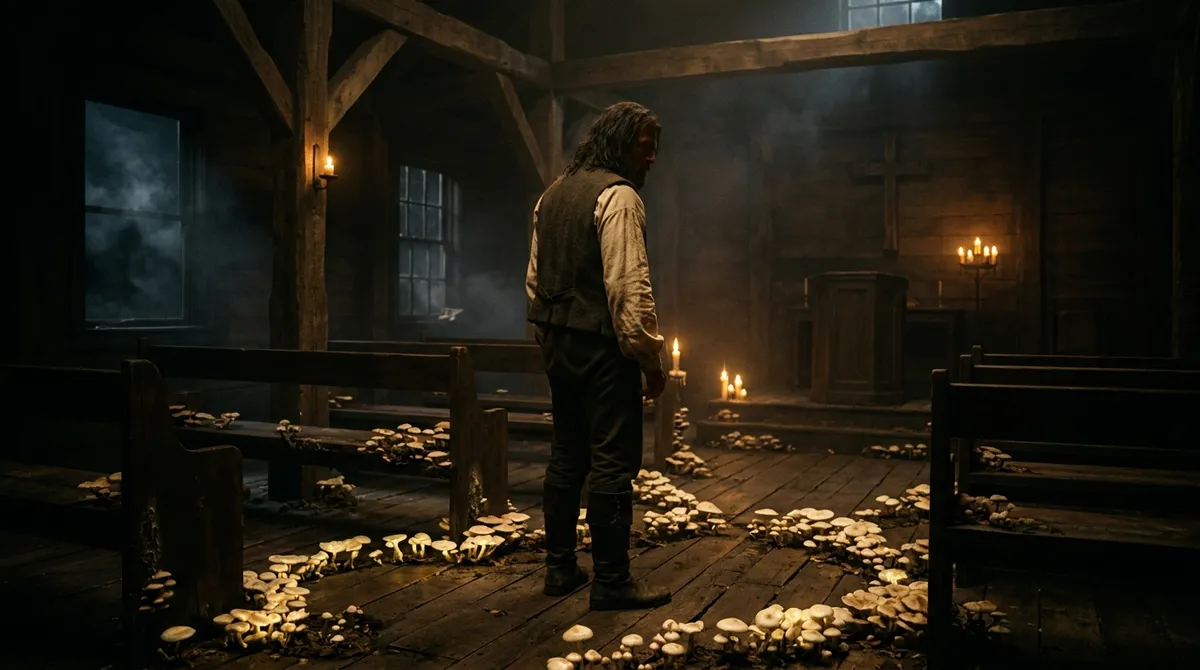
The flashback episodes reportedly unveil the supernatural foundation behind Widow's Bay's curse, centering on a mysterious mushroom covenant that has haunted the island for centuries. According to reports, the origin story introduces Richard Warren, a character who has somehow survived for 300 years on the island, becoming central to understanding the town's supernatural predicament.
Episode 6 functions as what reports describe as "a mini colonial horror film," using atmospheric direction from Ti West to create a stark tonal shift from the series' established comedy-mystery format. This genre reinvention demonstrates how prestige television is increasingly using midseason lore episodes as major storytelling tools.
The Mushroom Covenant Explained
The episodes reportedly provide crucial exposition about the supernatural elements that have been lurking beneath the surface of the series. The mushroom covenant appears to be the driving force behind the island's curse, though the exact mechanics of this supernatural agreement remain part of the show's evolving mythology.
According to reports, these revelations fundamentally change the meaning of everything viewers thought they knew about the island, transforming earlier comedic moments into something more sinister in retrospect.
Linklater's Horror Patriarch Performance
Hamish Linklater's portrayal of Richard Warren has drawn comparisons to his previous work, particularly his role in "Midnight Mass." Reports suggest that Warren fits into what's being described as the "charismatic, doomed horror patriarch" archetype that Linklater has become known for in the horror genre.
This casting choice appears deliberate, giving horror fans a strong crossover conversation point and reinforcing Linklater's position as a go-to actor for complex, morally ambiguous characters in supernatural television.
Balancing Horror and Comedy
One of the most challenging aspects of these episodes was reportedly maintaining the show's horror-comedy balance while diving deep into colonial-era terror. Dippold and Linklater discussed how the creative team navigated this tonal shift, ensuring that the flashback felt organic to the series' established voice while opening up entirely new narrative possibilities.
The chemistry between series lead Betty Gilpin and Linklater has been highlighted as particularly effective in bridging the show's comedic roots with its darker supernatural elements. Their dynamic reportedly helps anchor the more fantastical elements in relatable character moments.
Genre Reinvention in Prestige TV
The success of these episodes speaks to a broader trend in prestige television, where shows use carefully placed flashback episodes to completely recontextualize their narratives. "Widow's Bay" joins a growing list of series that have used this technique to deepen their mythology while surprising audiences with genre pivots.
According to reports, the flashback doesn't just add backstory—it actively changes how viewers understand the entire series up to that point, making it a masterclass in retroactive storytelling.
Looking Forward
With the colonial origin story now revealed and Richard Warren's 300-year presence on the island established, "Widow's Bay" has set up intriguing possibilities for its remaining episodes. The mushroom covenant and its implications for the modern-day characters promise to drive the series toward what could be a very different kind of conclusion than audiences initially expected.
These episodes demonstrate how effective horror-comedy can be when it commits fully to both sides of its genre hybrid, using humor to make the horror more impactful and vice versa. As prestige television continues to experiment with narrative structure and genre blending, "Widow's Bay" offers a compelling case study in how to successfully reinvent a series midstream without losing its essential character.